


Let's be honest, when you finish a hard workout and your coach or training plan tells you to go out the next day for a slow, easy jog, a small part of you wonders: what's the point? You're tired. You have limited hours in the week. And you're moving so slowly your neighbour’s elderly pug, Mutley, is sniggering at you as you go by.
So is that "recovery run" actually doing anything for you? Is it just a ritual built on decades of running lore derived from the practices of elite runners? Is there anything to support doing it?
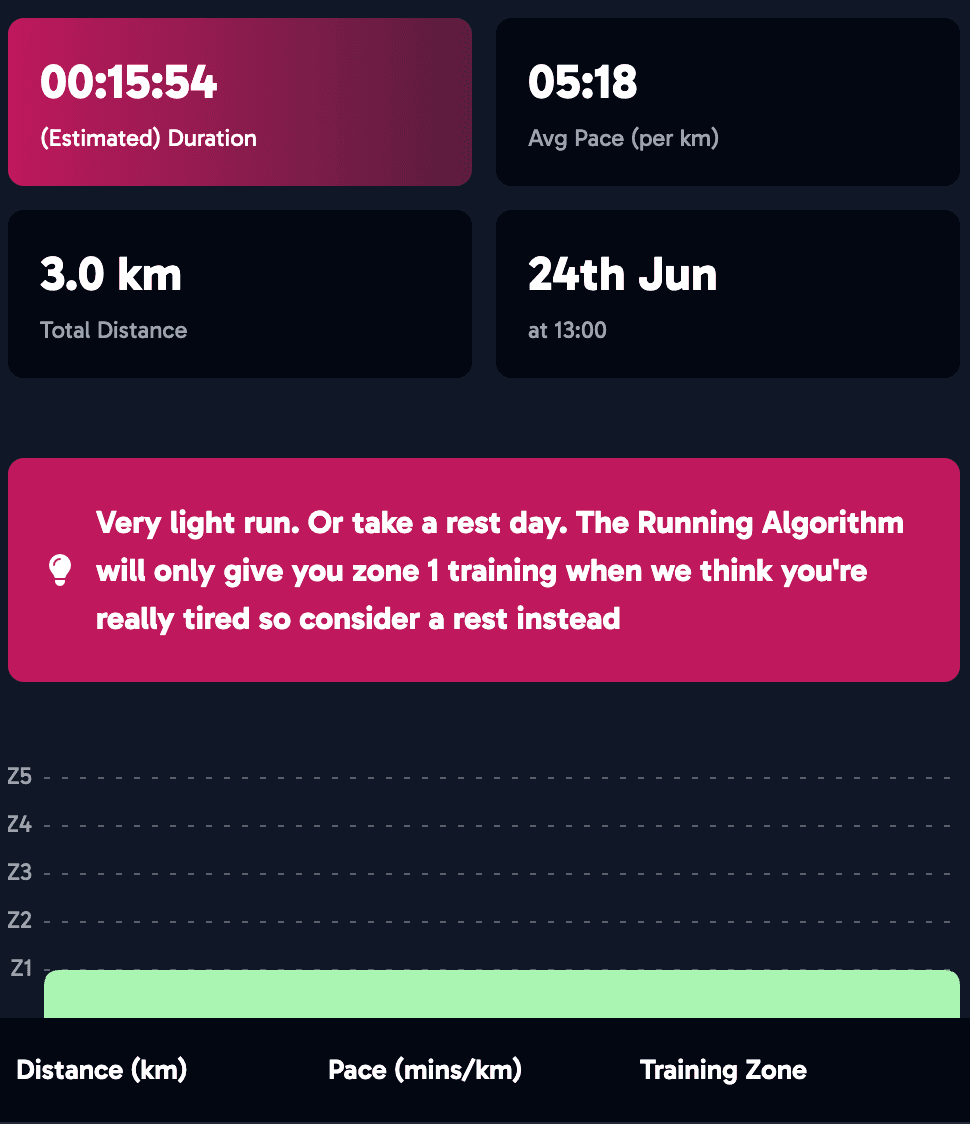
The Running Algorithm will only give you a recovery run when we think you’re extremely tired and should rest, but you want to run anyway.
The Core Problem: Too Hard to Be Easy, Too Easy to Be Hard
The key question is: are your recovery runs easy enough to be restorative?
Research consistently shows that the majority of recreational and even competitive runners run their "easy" days too fast. A true recovery pace can feel almost uncomfortably slow. Most runners end up somewhere in the 70–80% of maximum range, which means they're not doing enough to get fitter, but aren’t going slowly enough to recover. They're accumulating more fatigue on top of fatigue. If your recovery runs don’t feel like they are doing the job the chances are that you are either running them too fast, or you simply don’t need them.
It is very easy to go too slow to drive meaningful aerobic adaptation or too fast to allow genuine physiological recovery. You're essentially getting the worst of both worlds and might be better off going for an easy swim or easy bike ride (anything that takes away the impact but gets the blood flowing through your muscles).
The Opportunity Cost Argument
Every hour you spend jogging slowly is an hour you could spend on something with a measurable return:
Sleep and rest - Which is where actual muscle repair and hormonal recovery happen
Mobility and strength work - Addressing the imbalances that lead to injury
Mental recovery - particularly for athletes who train heavily and are prone to burnout
Cross training - Offloading impact with an easy bike ride or swim is more restorative, allowing your muscles, tendons and bones time to adapt without adding extra stress.
Cooking a nutritious meal - Eating enough protein and micronutrients will expedite recovery, but cooking healthy food can take time.
For a runner training 5–6 days a week with a full-time job and real life obligations, a 45-minute recovery run might be the first thing to cut in favour of an extra 45 minutes of sleep.
The Muscle Damage Argument
After a hard session, a long run, a tempo workout, high-mileage or hard intervals, your muscles can experience micro damage. When we allow time to recover this damage is repaired with stronger muscle fibres.
Active recovery has genuine benefits when it is things like light cycling or swimming that generate blood flow without significant impact loading. But jogging on pavement with tired legs is a different story. The repetitive impact stress, even at low intensity, can prolong the inflammatory response and delay your return to full readiness.
Who Should Reconsider Recovery Runs
Recovery runs are most often the wrong tool for:
Beginner runners who haven't yet built the structural resilience (tendons, bone density, connective tissue) to handle high weekly mileage. For a runner doing 25–35km per week, a recovery run is almost never a sensible addition to the programme (especially if they have access to cross training).
Injury-prone athletes for whom accumulated load is already a risk factor. If you're managing a nagging Achilles or ITB issue, a recovery run may be the straw that breaks the camel's back.
Time-constrained athletes who are better served prioritising quality over quantity in their limited training hours.
But… it’s not that simple
However, recovery runs are a legitimate and useful tool for many athletes, when used correctly. As our next blog Recovery Runs Are an Important Tool will show. High-mileage elite runners genuinely benefit from them, and for those running 80–180km a week, a truly easy 6km jog does serve a purpose. They can also have a mental health benefit for some: an opportunity to get out of the house and think. A little endorphin top up. And of course lowering our mental stress levels does have a positive impact on our training and adaptation. A final point, of course, is that some of us just like running and going for a run is better than not going for a run…