
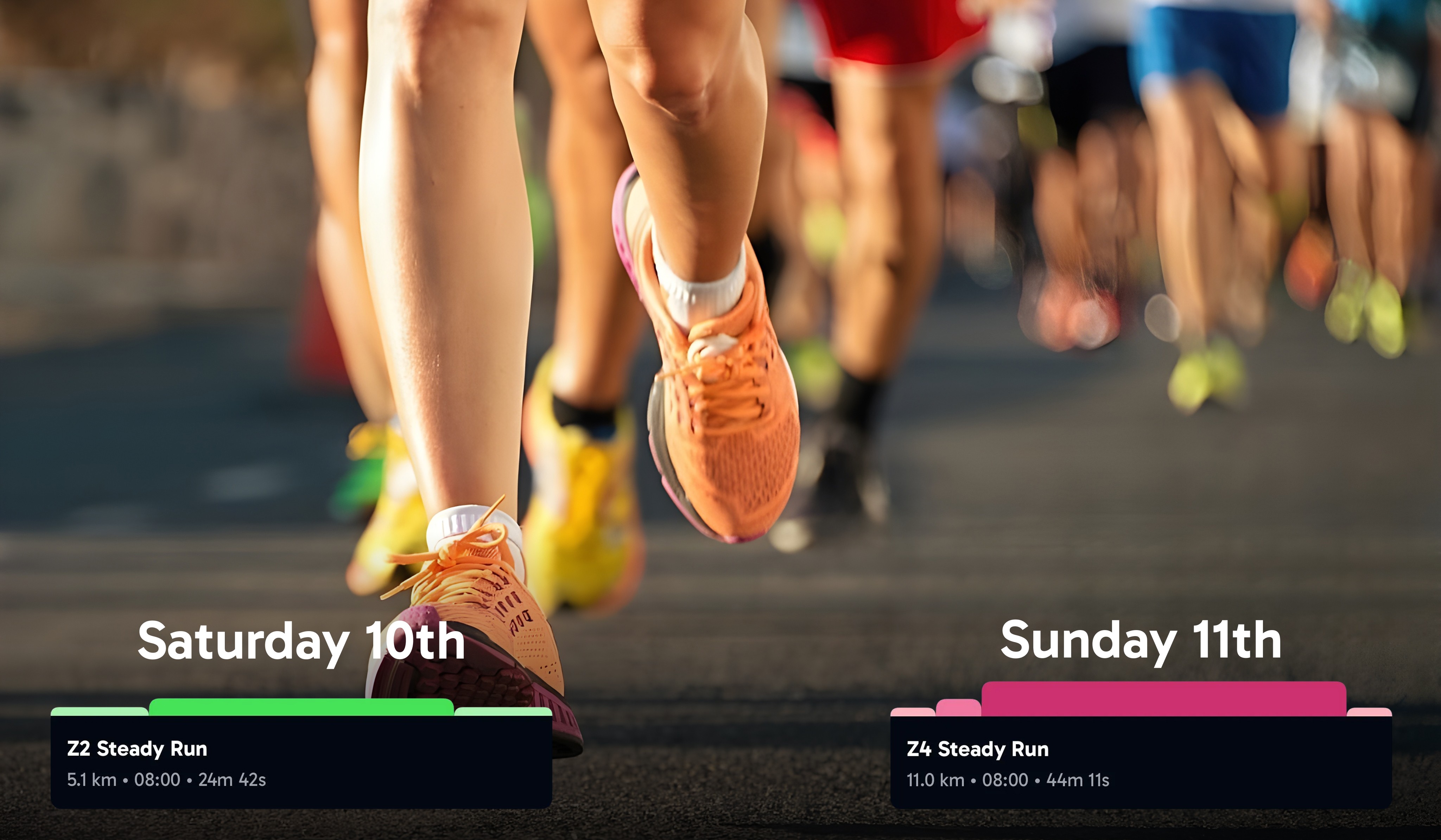

Three Key Sessions to Nail Your 10 km
The 10 km sits right on the boundary between speed and endurance. It is long enough that aerobic fitness is important, but short enough that pace control, efficiency and tolerance of discomfort can make or break the result. To run well over 10 km you need a strong aerobic base, the ability to sustain close to your maximal effort for a prolonged period, and enough speed in your legs to hold form as fatigue builds.
For most runners, a 10 km race is run close to lactate threshold intensity, a pace you can hold between 30 and 60 minutes. Faster runners will typically race slightly above threshold, relying on well-developed buffering and clearance systems. Novice runners tend to sit just below threshold, limited more by endurance than raw speed (how long it takes matters, a 30-minute 10km is physiologically different from a 60-minute one, even if you’re running it as hard as you can). That means the exact physiological “zone” that you’re racing in varies, but the goal is the same: sustain the fastest pace possible for you over 10km.
The three sessions below, all found in the Running Algorithm, cover the main adaptations needed to improve 10 km performance. They are simple, repeatable, and together they address endurance, sustainable speed and race-specific pacing.
Easy Z2 running
Easy Zone 2 underpins everything you do in training. This is comfortable, conversational running where breathing is controlled and the effort feels sustainable for a long time. The primary adaptations we get from running at a steady pace are aerobic. Regular Zone 2 running increases mitochondrial density, improves fat oxidation, and expands capillary networks in working muscles. All of these changes make it easier to produce energy aerobically and delay reliance on less efficient sources of energy.
For a 10 km runner, this matters because even though the race feels hard, the vast majority of energy still comes from your aerobic metabolism. A stronger aerobic base lowers the relative cost of race pace, meaning that what once felt demanding begins to feel manageable. Easy running also improves recovery between harder sessions and reduces injury risk, allowing consistency across weeks and months. Without enough Z2 volume, higher-intensity workouts tend to stagnate or break the runner down.
Tempo run
A continuous tempo run targets the ability to sustain a high but controlled effort. This is typically run at or just below lactate threshold. The pace should feel “comfortably hard”, something you can hold with focus but would not want to extend much beyond the planned duration. The Running Algorithm will vary the length of your tempos depending on your fitness and fatigue.
The key adaptation from tempo running is improved lactate production and clearance balance. Over time, the body becomes better at using lactate as a fuel (it’s not the bad guy, despite the rumours) and transporting it away from working muscles. This shifts the threshold to a faster pace, allowing the runner to sustain higher speeds before fatigue accumulates and slows you down. Tempo runs also improve muscular endurance and familiarity with sustained discomfort, both crucial for the last 5 km of a 10 km race.
800m reps at 10k pace with 200m jog recovery
Interval sessions like 800m reps at 10k pace introduce a more race-specific stress. The aim is not sprinting, but controlled speed with accumulating fatigue.
This session improves maximal aerobic power and running economy at faster paces. It challenges the cardiovascular system to deliver oxygen at high rates while reinforcing efficient mechanics under stress. The short recoveries teach the body to tolerate and clear metabolites while continuing to run fast, which mirrors the sensation of the later stages of a 10km race.
The Running Algorithm will automatically suggest the right pace to run these at, they’ll be somewhere between 5km and 10 mile race pace depending on experience, fitness and fatigue. The Running Algorithm will also automatically tell you how many reps to do. The benefit lies in learning to hold form and pace when breathing is hard and your legs are heavy.
Bringing it together
Individually, none of these sessions are magic, but together, they cover all the essential demands of the 10km. Easy Zone 2 running builds the aerobic foundation. Tempo running raises the ceiling of sustainable speed. Intervals sharpen pace control and efficiency under fatigue. When combined sensibly within a training week, they prepare the runner to approach the start line fitter, more economical, and better equipped to hold pace from the first kilometre to the last.