

In Short
Strides are relaxed bursts of speed that give you the benefits of fast running without adding fatigue. They sharpen neuromuscular communication, improve form, boost force and power, and make you feel smoother and more coordinated. Over time, they enhance running economy and confidence at speed, keeping your legs “awake” even during heavy training blocks.
The detail
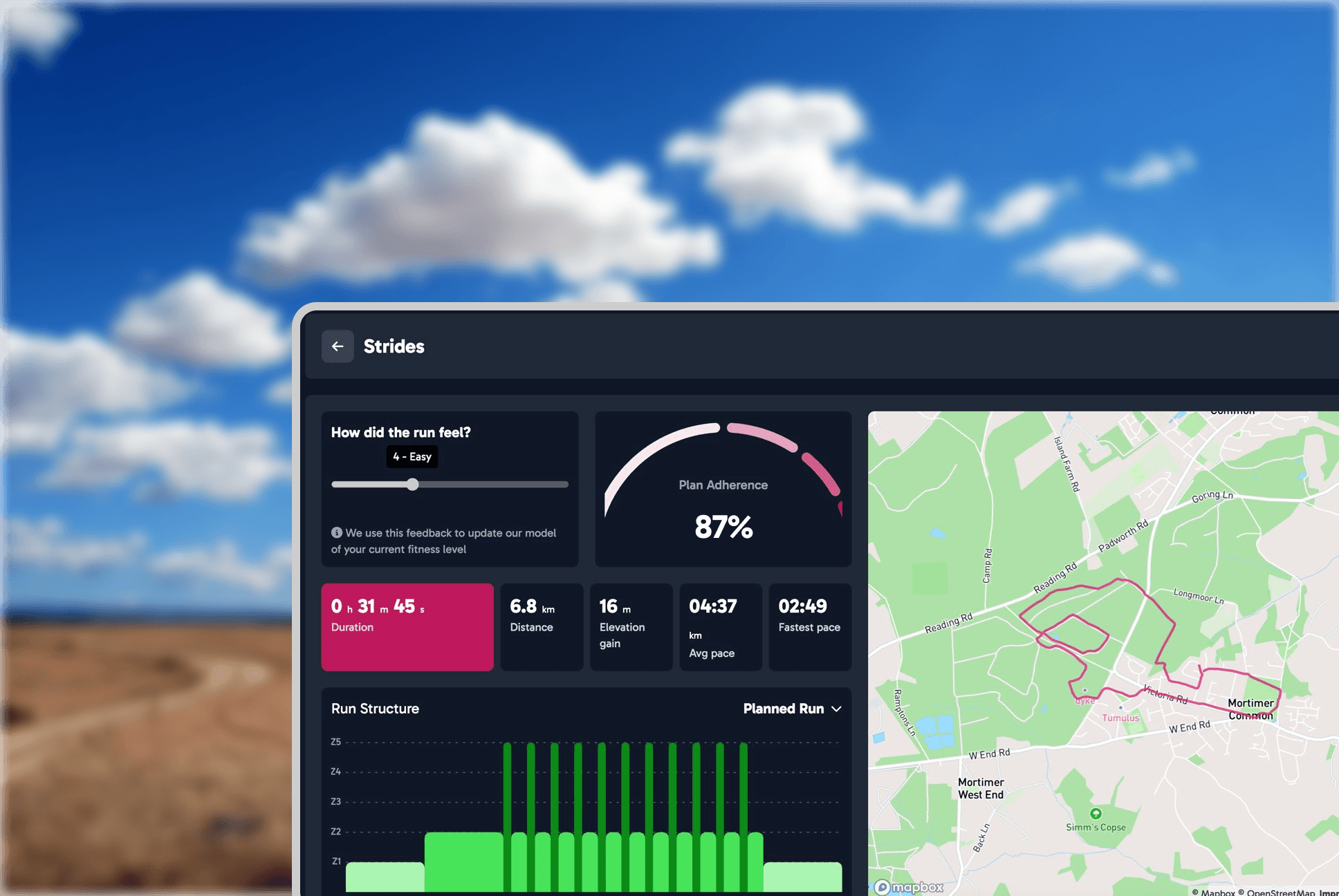
Strides are short bursts of speed over 15-30 seconds. The aim of doing strides is to get a little bit of leg speed in without making you tired. You accelerate into them, reach close to your maximum speed without going all out, and decelerate gently. They fit in the easy run category and show up as green on your Running Algorithm calendar. Think of them as a bit of spice in an otherwise easy run, not an interval session.
Strides work because they trigger a wide range of physiological and mechanical adaptations. Strides sharpen the communication between the brain and the muscles. Running fast demands rapid, precise signalling, and these short bursts of speed teach the nervous system to recruit motor units more effectively - it improves your brain’s ability to make your muscles do what you want them to do. Fast-twitch muscle fibres become more readily available, and the body learns to select and fire the right fibres at the right time. This all improves your “running economy” and reduces the amount of energy needed to run at a given pace. Runners often feel lighter and more responsive after incorporating strides into their routine.
Strides also refine biomechanics by allowing you to practise fast running with excellent form, without the fatigue that compromises longer intervals. They naturally encourage higher cadence, better energy return with each step, improved posture and core control, more effective arm drive, and a freer, more fluid hip extension. Because each effort is short and controlled, you can focus on quality rather than survival. Over time, these small technical upgrades accumulate into meaningful gains in running economy across all speeds.
Another key benefit is improved force and power production. Fast running increases ground reaction forces, enhances leg stiffness (a good thing!), and boosts the elastic recoil of tendons making each stride more efficient. The acceleration phase of a stride also stimulates the stretch-shortening cycle and trains the body to generate power rapidly but without excessive fatigue. This combination strengthens both your maximum speed and the “speed reserve” you rely on during longer races, making submaximal efforts feel more economical.
Finally, strides deliver meaningful psychological and sensory benefits. They help runners stay comfortable with faster paces even in heavy mileage phases, lowering the mental barrier to speed and boosting confidence before workouts. They also add variety and rhythm to weekly training, preventing monotony. Many runners notice that strides keep their legs feeling “awake”, primed, and coordinated during long training blocks.