
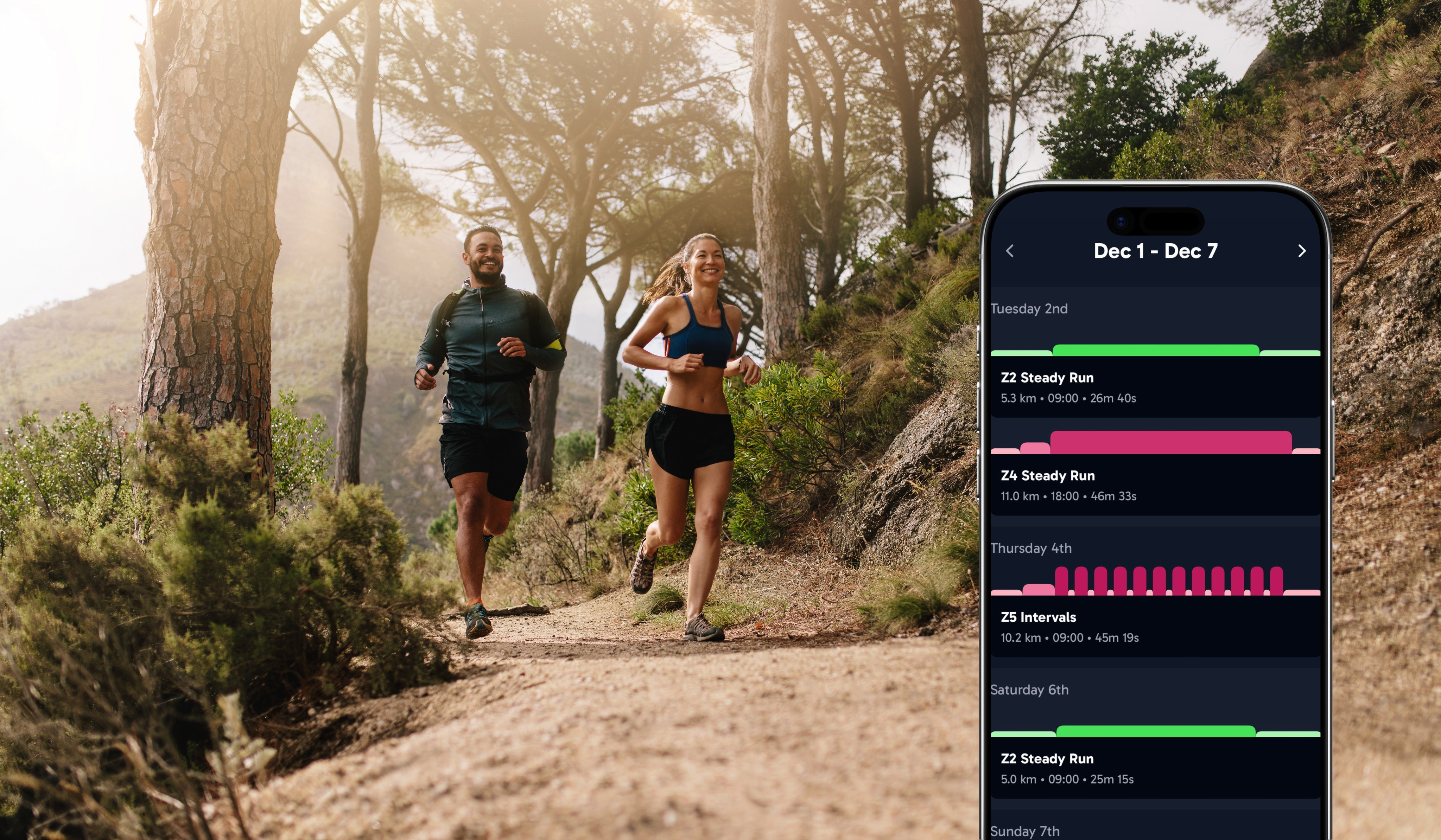

Different coaches use different models for training zones. A training zone is a way of describing the effort you're currently putting into a run - with our system zone 1 is very easy, zone 5 is very hard.
At the Running Algorithm we use the 5-zone model. It sits in the sweet spot: it’s detailed enough to distinguish recovery, aerobic, tempo, threshold, and high-intensity work, yet simple enough to use without overthinking.
Here's what they are:
Zone 1 – Recovery
Very light effort for gentle circulation and active recovery. This zone can help reduce muscle stiffness and promote healing without adding fatigue. Line up a podcast or super chill playlist and think of it as your “me time”. These sessions will be green in the app.
Zone 2 – Easy/Aerobic
Comfortable, conversational running that builds endurance. A lot of your weekly mileage will sit here because it develops aerobic efficiency with minimal stress. It is the foundation of long-term progression. These sessions will also be green in the app.
Zone 3 – Steady/Tempo
Moderate effort sitting between aerobic and threshold. It teaches you to stay relaxed while working a little harder, improving muscular endurance and efficiency. These sessions will usually be blue in the app, the vibe is “fun fast.”
Zone 4 – Threshold
Hard but controlled running that improves your ability to sustain faster paces. Training here increases lactate clearance and raises your sustainable speed. Think comfortably hard. Note that recoveries are usually Z2, sometimes even Z3, but not Z1. This adds an extra stimulus to help you maintain speed under fatigue, and is closer to races where a hill or surge might push you into a higher zone but you then have to recover on the fly. These sessions are usually blue, but can be red.
Zone 5 – VO₂max
Short, high-intensity efforts to build top-end speed and power. These intervals push your cardiovascular system close to its maximum capacity. Z1 recovery between reps can be as slow as it needs to be (walking is fine). When selecting your pace within the range, the top of the range isn’t always the best, find a pace you can maintain throughout; it’s better to complete the session than to run the first rep super fast then struggle to complete the session. These sessions are red.
How Are Zones Measured?
Zones are measured using both feel and pace.
Feel (Perceived Effort) is your primary guide. Your breathing, comfort, and sense of effort tell you what zone you’re really in. Feel automatically adjusts for heat, hills, fatigue, and stress, so it’s the most reliable way to judge intensity day to day.
Pace gives you a personalised target range for each zone. If you have a fitness watch, you can track your pace during your run. The Running Algorithm updates these ranges automatically after every run to reflect your fitness and fatigue.
How The Running Algorithm Adjusts Your Zones
Unlike downloadable training plans and many apps, The Running Algorithm updates your zones automatically after every run. It analyses your recent performances, fatigue levels, and fitness trends to keep your zones accurate and personalised. As your body adapts, or as fatigue builds, your zones shift so you’re always training at the right intensity. This flexibility has also got you covered if you change location to somewhere hotter or cooler, higher or lower. After one run in your new location your paces will shift.
Where Should You Run Within a Zone?
Each zone covers a range, not a single value. Where you should run within the range depends on several factors but the single most important consideration is feel. We give you the vibe, the description and the range, you find the pace that matches. Faster isn’t always better. Eliud Kipchoge (the first man to run under 2 hours for a marathon) runs his easy runs 2-3 mins per km slower than his marathon pace, so you can too.